

Budget deficit tops Rs. 161B in 8 months
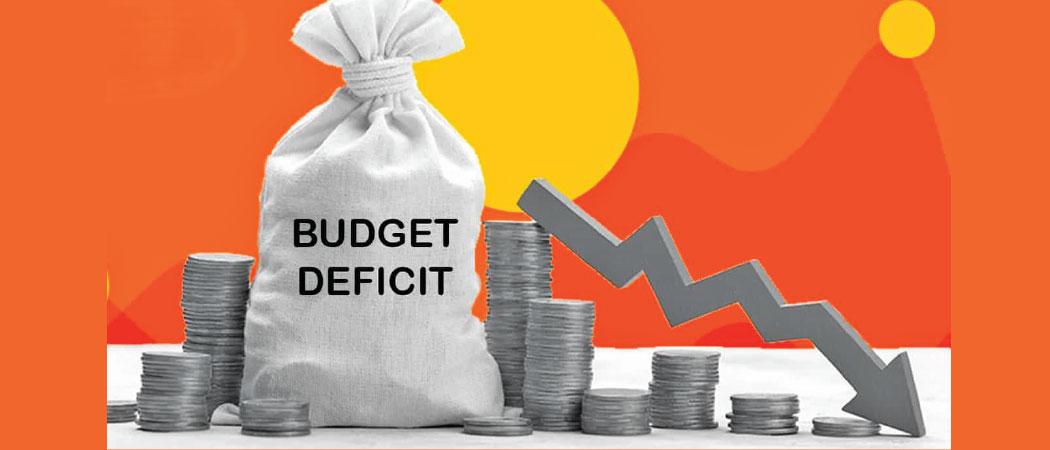
SATV, Kathmandu, Mar. 16 - The government expenditure has outpaced income during the first eight months of the current fiscal year 2025/26, resulting in a deficit of Rs. 161.48 billion.
According to the daily receipt and payment status report of the Financial Comptroller General Office (FCGO) under the Ministry of Finance, the government’s total income—including revenue, grants and other receipts—stood at Rs. 765.10 billion by mid-March.
This represents 49.89 per cent of the annual receipts target.
During the same period, the government’s total expenditure reached Rs. 926.58 billion, accounting for 47.18 per cent of the total annual budget of Rs. 1,964.11 billion.
Revenue remains the major source of government income.
According to FCGO, the government collected revenue worth Rs. 747.28 billion by mid-March.
This accounts for 50.49 per cent of the annual revenue target of Rs. 1,480 billion set for the current fiscal year.
The government has collected about half of its annual revenue target until the end of the first eight months of the fiscal year 2025/26.
Out of the total revenue collected so far, tax revenue amounted to Rs. 676.58 billion, achieving 51.04 per cent of the annual target.
Non-tax revenue stood at Rs. 70.69 billion, or 45.78 per cent of the annual target.
Of the total revenue collection target of Rs. 1,480 billion, Rs. 1,325.58 billion is to be raised under tax revenue and Rs. 154.41 billion under non-tax revenue in the current fiscal year.
However, during the mid-year budget review, the government revised its revenue and miscellaneous receipts estimate downward to Rs. 1,298 billion from the earlier target of Rs. 1,480 billion.
In addition to revenue, the government received grants worth Rs. 13.24 billion during the first eight months, which is 24.78 per cent of the annual grant target of Rs. 53.44 billion.
Similarly, Rs. 4.57 billion was received under other receipts.
Despite slow growth, revenue collection increased by 3.67 per cent compared to the same period last fiscal year, when the government had collected Rs. 720.79 billion in the first eight months.
Capital expenditure stands at only 19%
On the expenditure side, recurrent spending has remained high while capital expenditure continues to lag behind.
Meanwhile, capital expenditure has remained sluggish even after eight months of the current fiscal year.
According to the FCGO, only 19.24 per cent of the annual capital expenditure budget has been utilised by mid-March.
The government had allocated Rs. 407.88 billion for development spending in the current fiscal year, but only Rs. 78.48 billion has been spent so far.
The pace of capital spending is slower compared to the same period last fiscal year 2024/25, when 23.43 per cent—equivalent to Rs. 82.56 billion—of the Rs. 352.35 billion allocated had been spent during the first eight months.
As in previous years, capital expenditure is expected to increase sharply during the final months of the fiscal year.
In contrast, recurrent expenditure has continued to rise. The government spent Rs. 642.14 billion under recurrent expenditure during the review period, representing 54.37 per cent of the allocated Rs. 1,180.98 billion for the fiscal year.
During the same period last fiscal year, recurrent spending stood at 51.34 per cent, or Rs. 585.61 billion, of the Rs. 1,140.66 billion allocation.
Under the financing heading, the government spent Rs. 205.95 billion in the first eight months—54.89 per cent of the total allocation of Rs. 375.24 billion.
Based on the mid-year review, the Ministry of Finance has revised its projections for both revenue and expenditure. The ministry estimates that only 85.96 per cent of the initially allocated budget will be spent in the current fiscal year.
According to the revised estimate, total expenditure is projected to reach Rs. 1,688.32 billion—around Rs. 275 billion less than the original budget allocation.
Recurrent expenditure is expected to reach Rs. 1,125.97 billion, while capital expenditure is projected at Rs. 243.30 billion by the end of the fiscal year.
About the author
System Admin
This author has not added a bio yet.
Comments (0)
Be the first to comment!
Leave a Reply
Your comment will be reviewed by an admin before being published.